
The Regulators Angle

Regulatory certainty is key to a flourishing life reinsurance market. At Life-Re Europe, regulators showed receptivity to this newly emerging market development.

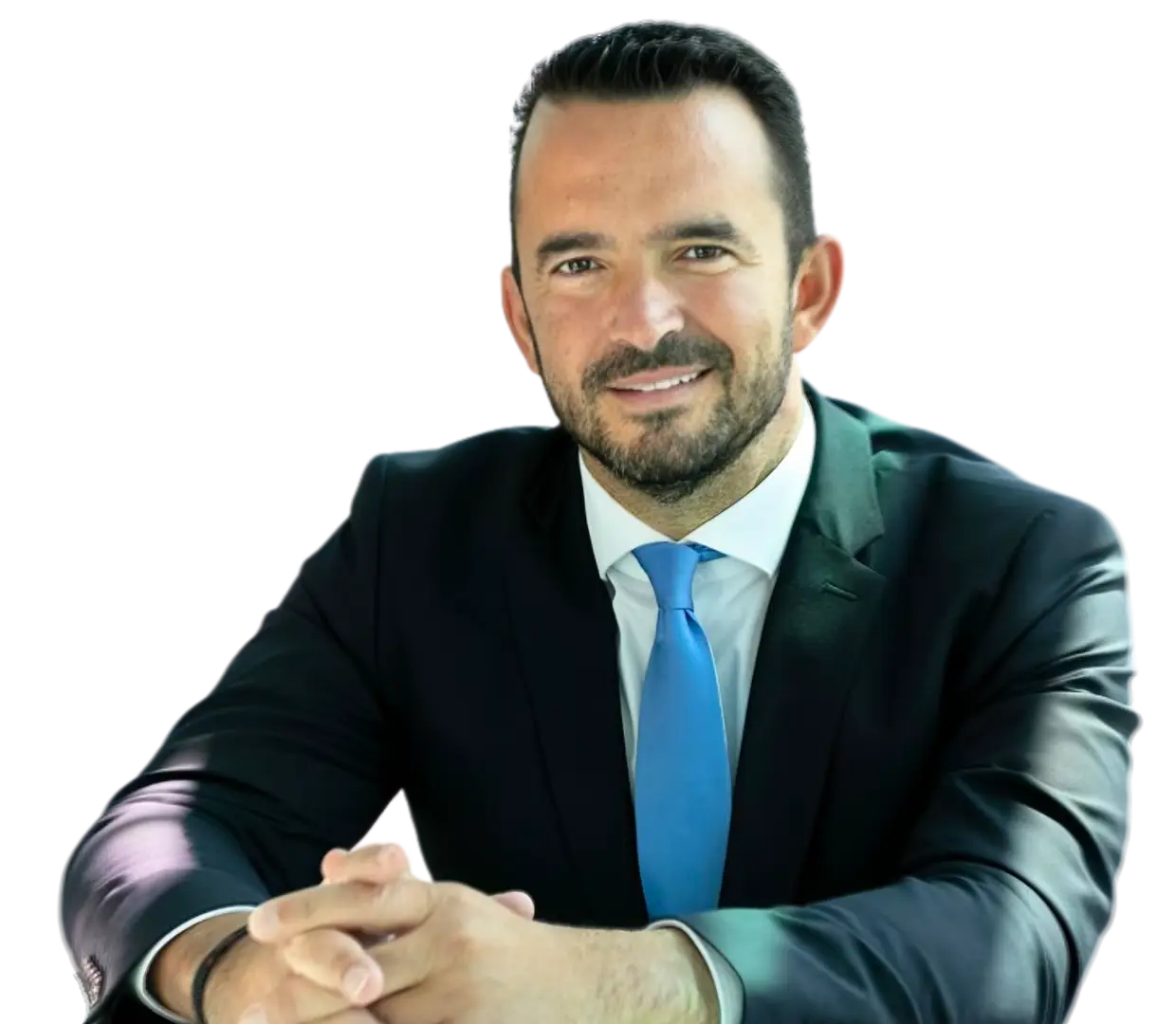
“Asset intensive reinsurance (AIR) is a tool like a hammer,” said Dimitris Zafeiris, Head of Risks and Financial Stability Department at EIOPA. “You can use the same tool to hammer a painting on the wall. You can also use it to break your finger. The tool itself is not the bad thing, how it is used is the question.”

That was one of the key messages delivered during a regulatory fireside chat at the Life-Re Europe conference in Frankfurt.

AIR remains the topic du jour in the life markets right now. The business has been expanding quickly around the globe, most apparently in the US, Japan and Bermuda, where insurers have used it to shed unwanted liabilities and free up capital. Europe is a different story.

The disparate markets on the continent have so far shown little movement on AIR. But there are signs of a shift. Certainly, the chatter around the topic at Life-Re, suggests the time for European AIR is now.

Dimitris Zafeiris
Head of Risks and Financial Stability Department, EIOPA

Keynote address

Delivering the keynote address at Life-Re, Rita Laura D’Ecclesia, Member of the Board of Directors at Italy’s insurance regulator IVASS, spoke at length about AIR and cited some of Europe’s biggest insurance groups – Allianz, AXA and Generali – who may be looking at it. While deals remain thin on the ground, talk amongst participants and regulators is ramping up. IVASS, at least, seems open to help.

“The role of reinsurance is very important across the industry,” D’Ecclesia told the audience. “It plays a strategic role in managing emerging risk.”

“The role of reinsurance is very important across the industry. It plays a strategic role in managing emerging risk.”

Rita Laura D’Ecclesia
Member of the Board of Directors, IVASS

In a slideshow D’Ecclesia highlighted the benefits of reinsurance in enabling more accurate and sustainable pricing and helping bolster the “durability, resilience and stability of the insurance market.” Even so, the European AIR market remains tiny with just a handful of publicly announced transactions to date. D’Ecclesia referenced figures in a 2024 Financial Stability report issued by EIOPA, showing that only 2.5% of the total global amount of insurance liabilities has been ceded. In Europe that figure is less than 1%. Growing that figure is the aim.

Regulators at odds

Europe might well be watching the developments in other countries for guidance. While the US seems more open to helping foster AIR, a contrary view has been taken by the UK’s Prudential Regulation Authority (PRA) which last year sought to tighten the knot on AIR (funded reinsurance) when it criticised its use as a potential arbitrage play for insurers seeking better capital treatment in offshore jurisdictions.

“We need to have a more transparent assessment of this activity,” said D’Ecclesia. But she struck a positive note when she said: “The aim should not be to ban certain deals or to impose restrictions on the insurance market, but to get more transparency and to better understand the actual risks of these deals.”

From a pan-European perspective, the European Insurance and Occupational Pensions Authority (EIOPA) has been working on several strands of life insurance supervision in the last year, including on AIR.

In an afternoon panel, EIOPA’s Zafeiris, said the authority will likely be issuing a paper on the market this year, to go alongside its investigations into private equity and private asset use. This may help uncover some of the complexities of the market. These kinds of analyses are designed to help practitioners become more comfortable with these new business models.

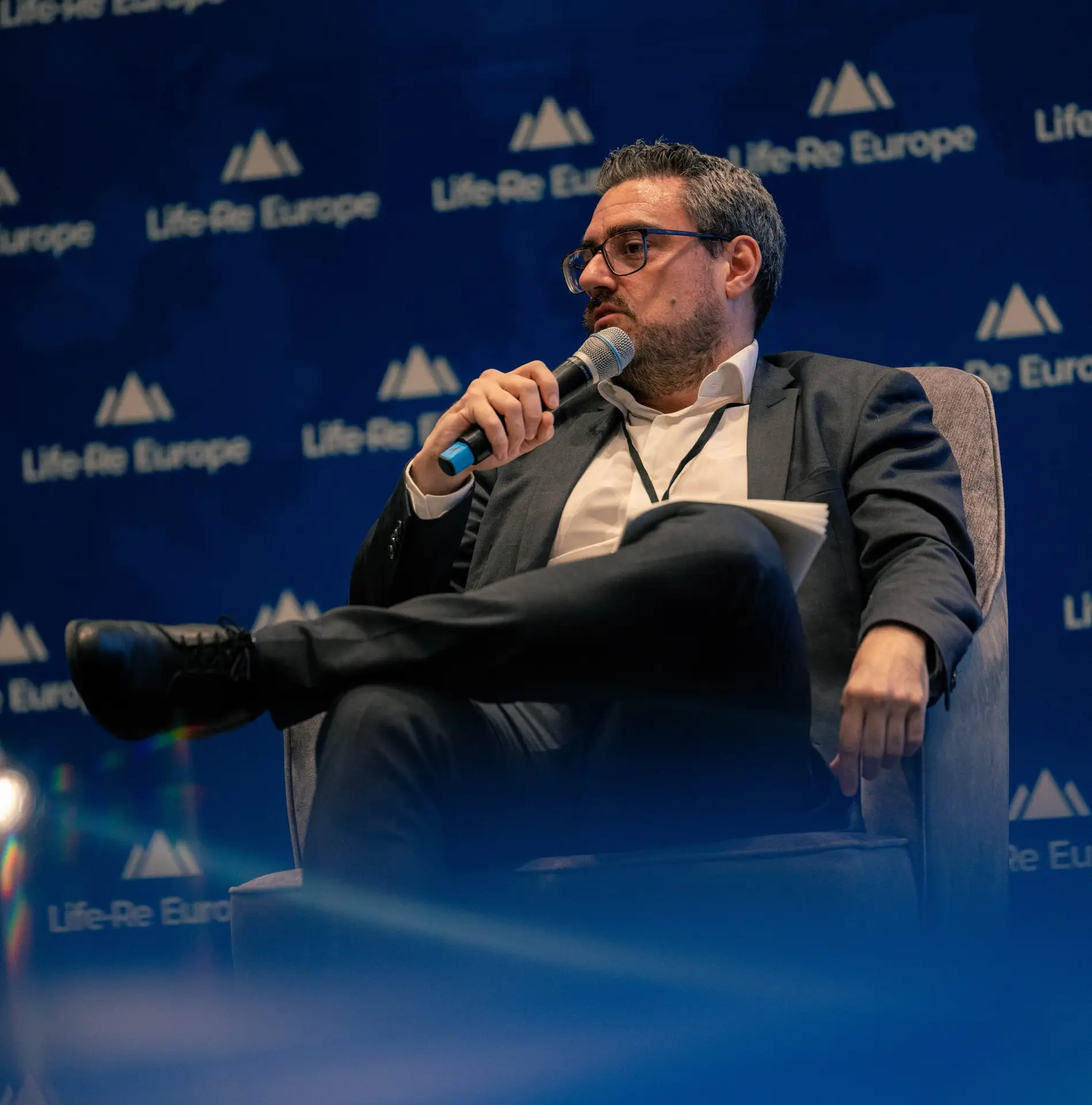
Dieter Hendrickx, Head of Insurance Supervision, NBB and Chair of the IAIS’s Monitoring and Risk Assessment Committee.

Where does Europe stand on this? According to D’Ecclesia, greater transparency of AIR is desirable to understand the use of the tool.

“When you are not familiar with something, when something is new or when something is perhaps not clear, the first reaction would be to be a bit conservative and cautious on it,” he said. “But when someone like EIOPA or the IAIS says something about things like alternative investments or AIR, it is not because they want to stop this type of development. The intention is to make it develop in a sound way.”

Asked whether there might be a specific regulation for AIR, Zafeiris said no.

“I doubt that a tailor-made regulation would be ever discussed for this. Perhaps supervisor approaches, yes, but not regulation.”

Dieter Hendrickx, Head of Insurance Supervision, NBB, has been looking at the global use of AIR in his role as Chair of the IAIS’s Monitoring and Risk Assessment Committee. He admitted it is not an easy market to get to grips with. But he also spoke about the benefits of this tool.

“I’ve done it myself trying to assess an asset intensive reinsurance transaction with all the tweaks around collateralisation etc – it’s not an easy thing for a supervisor,” he said. “The link between what is transferred in terms of risk and what is the relief in terms of SCR is crucial for all supervisors. Within those boundaries, innovation within reinsurance, like asset intensive reinsurance, has a place to provide capital and to help create extra capacity.”

So what for the future? Regulators are clearly becoming more aware and considered in their approach to AIR. And certainly, as the conversations at Life-Re suggested, the goal is not to hinder this market. But investigation is needed. Guidance, like the one EIOPA is planning, could be crucial to inserting confidence into a market that is hankering for more certainty.

Alternative assets: no longer a hunt for yield

The development of AIR is tied closely to the increased use of non-traditional investments by insurers. Many of the reinsurers taking ceded insurance assets are specialists in non-traditional investing, including private assets and illiquids. And this is part of a wider trend that is drawing more insurers into the alternatives fray.

EIOPA’s Zafeiris has also been working on analysing insurer use of alternative assets for the authority.
He said what was once seen as a reaction to the low interest rate environment post-2008 financial crisis, has now become an embedded part of the insurance landscape.

“We have seen a relatively long-term increase of [non-traditional] assets,” he told the audience at Life-Re Europe. “We were expecting to see it in the low yield environment, but we saw it continuing when yields increased, which makes you understand that this is less of a cyclical move. It is not a hunt for yield, as it was called at that time, but something more structural.”

Zafeiris highlighted regulatory concerns over valuation of such assets and the challenges for regulators in analysing the growth of the market.

“Supervisors are used to deal with marketable securities. It is a different world they are entering.”

Indeed, the world is looking a lot more complex than it used to when an insurer went long its sovereign and corporate bond and sat on it to perpetuity. Regulators will want to keep up.

European harmonisation is the goal

Europe’s insurance market remains both helped and hindered by its diversity. With the multiple modes of business on the continent, is unity possible?

Harmonisation has been a key talking point for European insurance regulators for years. And it still is. At the beginning of 2026, EIOPA set out three priorities for its work – top of this was strengthening Single Market integration. So how realistic and needed is the goal of unity?

In her keynote address at Life-Re Europe, Rita D’Ecclesia, Member of the Board of Directors at IVASS, spoke of the need for harmonisation to create a level playing field for European re-insurers given the multiple risks showing themselves in the world right now. The focus on harmonisation would help make the European market work better – and solidify its position on the global stage. But getting to convergence in a region characterised by diversity, is complicated.

“Everyone discusses the need for convergence, but most of the time they mean for everyone else to convert to what they do at the national level,” said Dimitris Zafeiris, Head of Risks and Financial Stability Department at EIOPA.

According to Zafeiris, much of what happens in European law “is also a result of what happens at the national level, meaning that sometimes there are a lot of ‘requests’ to keep national specificities when European laws are agreed or compromised.”

Regulators are trying, but convergence remains a distant goal.

Recent News

Longevity risk in Europe

Longevity reinsurance is booming in the Netherlands. What are the drivers and will the rest of Europe follow suit? What occupation should you pursue if you want to live longest? According to the panel on longevity at Life-Re Europe, librarian


The European consolidation wave

It has been long talked about but consolidation could be coming to Europe in a big way as participants from Viridium and Frankfurter Leben discussed at Life-Re Europe.

The PRA’s funded re clampdown

Has the PRA crashed the funded re market? That is the question many are asking following its recent proposal to hit the UK’s funded re business with a 10% capital charge.

Europe’s need for AIR

Asset intensive reinsurance (AIR) has taken hold in life markets around the world. Europe, though, is a different story. But does Europe really need AIR?

Life-Re Europe 2026 round-up

Life-Re Europe held its first event in April. From longevity to reinsurance, assets to regulations, the forum covered a manifold range of key topics for the European life insurance market.

The Regulators Angle

Regulatory certainty is key to a flourishing life reinsurance market. At Life-Re Europe, regulators showed receptivity to this newly emerging market development.

©2025 Life-Re