
The Value of Curiosity

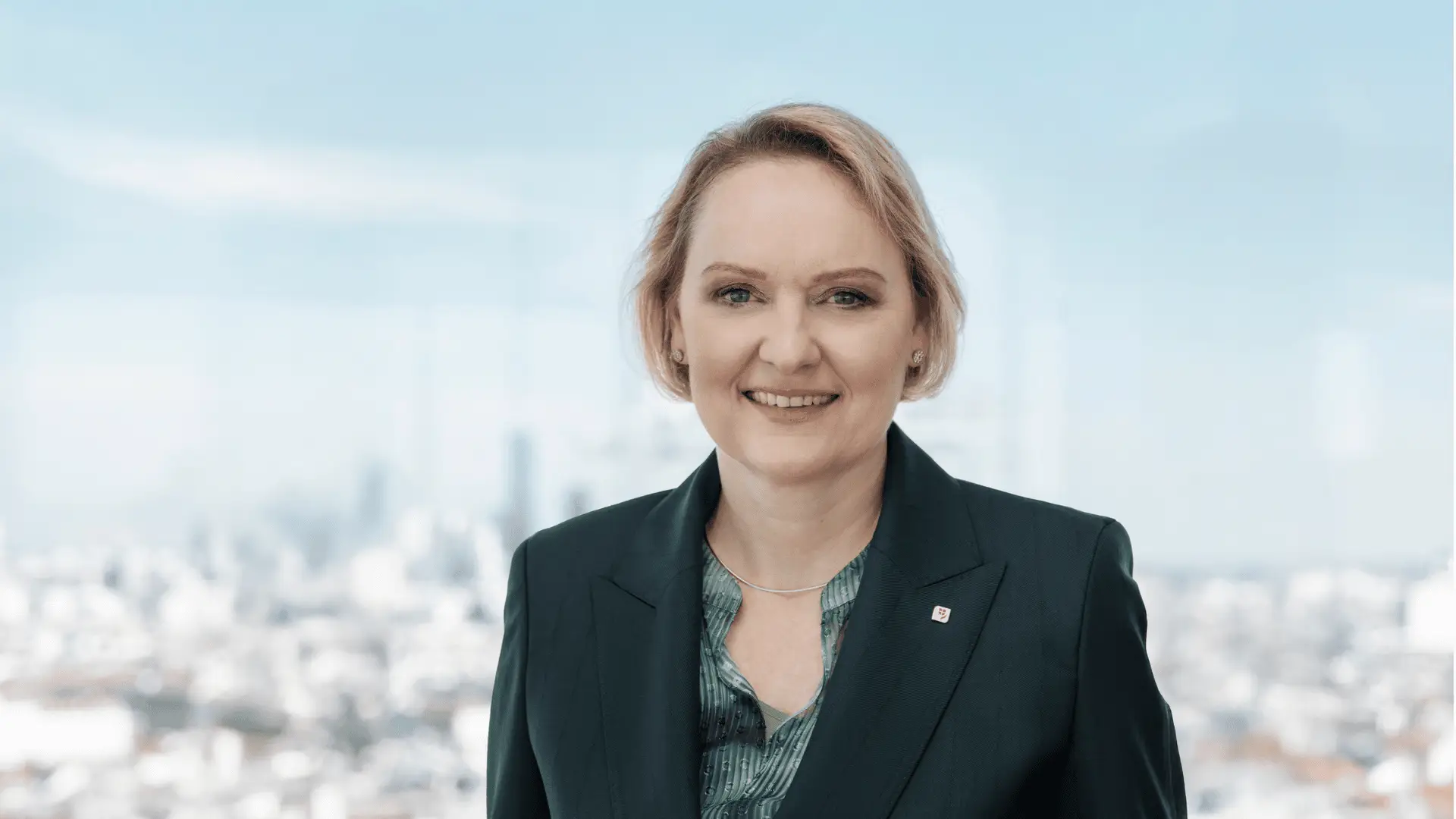
Liane Hirner, CFRO of VIG, has a strong belief in the merits of listening. It is a trait that has helped her navigate the shifts seen in life insurance in recent years, including macro volatility and the advent of trends like PE and asset intensive reinsurance.

Inside the headquarters of Vienna Insurance Group (VIG), overlooking the Danube, Liane Hirner sits at the nexus of finance and risk for Austria and Central and Eastern Europe’s largest insurance group. As Chief Financial and Risk Officer (CFRO) of the Austrian insurer, Hirner oversees a €54.3 billion balance sheet (not including the recent German Nürnberger acquisition), spanning 30 countries and 50 plus insurers and pension funds. It is a role that requires some self-assurance. But when asked about the personal philosophy that underpins her work, Hirner bypasses typical corporate platitudes in favour of something more spiritually satisfying: 

“As the Dalai Lama once put it: ‘When you talk, you are only repeating what you already know. But if you listen, you may learn something new.’”

Indeed it is curiosity that has proven a guiding principle for an insurance leader navigating an era of unprecedented volatility. 

Risk v Reward

The eternal debate between risk and reward is one that insurers are faced with on a constant basis. Having joined VIG’s Managing Board in 2018 as CFO before formally combining the finance and risk mandates in 2020, Hirner’s dual remit places her on the front line of these two forces. Her responsibilities include, group finance and regulatory reporting, risk management, group actuarial, planning and controlling, tax reporting, European Affairs, investor relations and actuarial function.

If it seems like an exhausting job, combining the finance and risk functions at VIG is something Hirner believes has helped her.

“Every risk also has financial implications, and we [insurers] manage not only based on risks but, above all, based on financial results,” she says. “These are interconnected factors that must always be considered together.”

Hirner believes the life insurance environment has changed significantly from what it was in both the economics of existing portfolios and the attractiveness of new business caused by a volatile macro environment that has seen conditions swing from a decade of ultra-low interest rates to rapid rate hikes, spiking inflation, and a subsequent recalibration. For VIG, some of the changes include a greater demand for traditional savings and retirement products, which have become more attractive on the back of higher yields, while at the same time seeing customers show a strong interest in unit-linked and more flexible solutions.

VIG’s span across the diverse continental market means managing both the dynamics of supply and demand and many-tiered markets needs a nuanced approach. “There is no single European life insurance market,” Hirner says. “Customer preferences, pension systems, tax incentives, and levels of insurance penetration differ substantially. Our decentralised governance model allows local companies to respond in a targeted way, rather than imposing one single product strategy across the Group.”

Regulatory Complications

Hirner’s influence extends beyond Vienna to the regulatory corridors of Brussels and Frankfurt. Re-elected in 2024 to the European Insurance and Occupational Pensions Authority (EIOPA) Insurance and Reinsurance Stakeholder Group, she actively channels industry insights into European rulemaking.

In a recent interview, Alexandra Jour-Schroeder, Deputy Director-General of DG FISMA, European Commission, told Life-Re about the current push to get European insurers involved in the European economy amid efforts to bridge the continent’s €800bn economic investment gap. Hirner says things are moving in the right direction as regards insurers playing a more active role in the European economy. 

Even so, as a company, VIG has mixed feelings about the Solvency II Review. On the positive side, the review aims to further develop the regulatory framework and adapt it to changing market conditions. But, says Hirner, there are areas for further simplification and a stronger need for practical application. She says that excessive reporting requirements and complex technical regulations – such as the ‘volatility adjustment’ –is an area where the opportunity to simplify or improve has not been taken. 

“Regarding the quantitative adjustments, VIG expects only limited impacts on solvency ratios in some areas, whilst the implementation effort is, in some cases, considerable,” she says. “In certain risk modules – for example, in the treatment of interest rate risk – the changes may also have a noticeable impact on capital requirements.” 

While Europe has very high regulatory standards, “which is fundamentally positive for policyholders,” the challenge is the cumulative effect of its rules. 

“Every individual regulation may have a legitimate objective, but when you put all the requirements together, complexity becomes significant.”

While the EC aims to unlock institutional capital for European infrastructure and green transitions, Hirner remains sceptical that regulatory tweaks alone will dramatically alter portfolio allocations. For example, lower capital requirements under Pillar 1 may make long-term equity investments relatively more attractive, “but this does not imply an automatic or short-term reallocation,” she says. “Strategic asset allocation, ALM, liquidity, and local regulatory mandates remain our primary drivers.”

What about the much vaunted Solvency and Financial Condition Reports (SFCR) designed to give further information to stakeholders? Not that useful, it seems.

“Our download statistics indicate that public interest in documents like the Solvency and Financial Condition Report (SFCR) remains relatively limited,” Hirner notes drily. “The outcome should not be overregulation. It should be smarter regulation: clear rules, proportionality, and enough room to innovate.”

M&A Discipline and the PE Question

In May, VIG concluded the largest acquisition in the group’s 200-year history when it took over Germany’s Nürnberger insurance group, bolstering its footprint in biometric life products such as occupational disability insurance. 

Globally, the insurance market has seen a significant uptick in appetite for consolidation and acquisitions, particularly with the advent of private equity (PE) which has brought a growing appetite for insurance portfolios into this world. Could this be a challenge to traditional insurers?

“I would not generalise. PE brings sophisticated investors and additional capital into the sector, which can be positive. But insurance is ultimately a promise to our policyholders that can last for decades. Therefore, irrespective of who owns an insurer, regulators and policyholders need confidence in the capital structure, investment strategy, governance and long-term commitment of the owner.”

Hirner offers a pragmatic view on VIG’s future M&A approach: “We do not pursue growth for growth’s sake.”

As has been pointed out the life insurance business is a market in flux, with continued changes occurring all the time. As VIG navigates shifting demographics, macroeconomic cycles, and evolving European regulations, Hirner’s approach remains anchored in operational clarity and continuous learning.

“My job is to turn complex financial, actuarial, and regulatory information into actionable decisions—and present those issues simply,” she reflects. “To do that across an international group, you have to bring curiosity, a grasp of detail, and above all, a willingness to listen to the people on the ground.”

It is this mix of curiosity and openness to listen that should put Hirner in a strong position to continue steering one of Europe’s most diversified insurers. 

VIG’s position on AIR​

Among the structural trends sweeping global life insurance, few have generated as much debate as asset-intensive reinsurance (AIR). The tool—which transfers not only biometric mortality/morbidity risks but also financial and investment exposures off balance sheets—has seen explosive growth in North America and Asia, often backed by private equity capital seeking long-duration assets.

For VIG’s CFRO, AIR might be considered a useful tool—but with conditions. 

“Asset-intensive reinsurance is certainly an interesting development and we follow the market closely,” Hirner acknowledges. “It can be a useful instrument because it can transfer financial and investment risks and potentially improve capital efficiency.”

At the same time, she says it is important to understand “what is actually being achieved through such a transaction.” 

“Risk does not disappear simply because it is transferred,” she says. “You have to look very carefully at counterparty risk, collateral arrangements, the quality of the underlying assets, liquidity, concentration and the long-term alignment between the parties.”

To-date the growth of AIR in Europe has lagged that in other jurisdictions like the US or Japan. And Hirner warns against assuming the US AIR playbook can be blindly imported into Europe. She says there are structural differences in the markets and the different regulatory frameworks which may make it a longer-term process. Even so, given its usefulness, she says she could see AIR being used by VIG as a capital and risk-management instrument.

“We have a strong capital position and a well-diversified business model, so there is no necessity to pursue such transactions simply because they are fashionable elsewhere. If a structure created genuine economic value for VIG and our policyholders and met our risk standards, we would of course assess it. But economics, transparency and risk transfer would have to be convincing.”

Recent News

The Value of Curiosity

Liane Hirner, CFRO of VIG, has a strong belief in the merits of listening. It is a trait that has helped her navigate the shifts seen in life insurance in recent years, including macro volatility and the advent of trends

Japan’s AIR makeover

The Japanese FSA’s nuanced overhaul of its asset intensive reinsurance rules has been welcomed by participants as keeping a key capital-management tool intact for the country’s life insurers. So what do the new rules say?

Sweden a shining star in Europe’s insurance market

The Swedish insurance market is a model in innovation, investment and healthy risk-appetite. Countries around Europe are looking to see what they can learn from their Nordic neighbour, as Magnus Vesterlund, Chief Economist at Svensk Försäkring discusses.

Longevity risk in Europe

Longevity reinsurance is booming in the Netherlands. What are the drivers and will the rest of Europe follow suit?

The European consolidation wave

It has been long talked about but consolidation could be coming to Europe in a big way as participants from Viridium and Frankfurter Leben discussed at Life-Re Europe.

©2025 Life-Re